
CRE Sponsors: 3 Lender Term Sheet Lines to Check Before You Sign

A lender term sheet is a lender-issued proposal that summarizes the proposed loan economics and conditions, and in commercial real estate financing, it’s almost always non-binding. Before you read past the first page, check three things: the interest rate structure, the loan amount relative to value or cost, and the scope of the guaranty. Everything else in the document exists to support or qualify those three points.
TL;DR:
- The interest rate, loan-to-value cap, and scope of guaranties are the most critical elements to verify early in the term sheet process.
- Most terms, including fees and loan structure, can change during underwriting, but rate and fee structures tend to remain relatively stable.
- Negotiating the guaranty scope for limited recourse or carve-outs can significantly influence future lending terms and sponsor risk.
- Legal review before signing helps prevent ambiguous language and unfavorable covenants from causing problems later in the deal process.
- Walking away from a non-binding term sheet usually has minimal legal repercussions but can impact reputation and future financing relationships.
Table of Contents
- What Is a Lender Term Sheet and What Does Each Line Mean?
- What Does a Redacted Term Sheet Actually Look Like?
- How Do You Negotiate a Lender Term Sheet?
- From Signed Term Sheet to Closed Loan: What Happens Next
- What Happens If You Walk Away From a Term Sheet?
- Can a Term Sheet Affect Your Credit or Future Financing?
- Do Bank, Non-Bank, and Private Equity Term Sheets Look Different?
- Why Legal Counsel Reviews the Term Sheet Before You Sign
- Why Advisors Change the Outcome of a Term Sheet Negotiation
- How Brookmont Capital Ventures Helps You Get to a Better Term Sheet
- Where to Read More on Term Sheets and Loan Documentation
- Sources
- FAQ
What Is a Lender Term Sheet and What Does Each Line Mean?
A lender term sheet lays out the loan amount, pricing, structure, and conditions a lender proposes before it commits real underwriting resources to your deal. It’s a starting point for negotiation, not a contract. As PropertyMetrics explains, the term sheet is typically non-binding and functions as the framework for underwriting and drafting the definitive loan documents that follow. That distinction trips up a lot of first-time borrowers who treat a signed term sheet like a done deal, only to watch the appraisal or environmental report reshape the numbers weeks later.
Here’s the anatomy of a standard commercial term sheet, component by component:
- Loan amount and leverage metrics. Sizing usually gets set by the lower of loan-to-value (LTV) or loan-to-cost (LTC), and lenders will often cap both independently rather than picking one.
- Interest rate mechanics. Fixed-rate deals reference a spread over Treasuries or swaps; floating-rate deals reference SOFR plus a spread, often with a rate floor and sometimes a cap.
- Fees and points. Origination fees (commonly 0.5% to 1.5% of loan amount), commitment fees, and draw fees on construction facilities all need to be identified by who pays and when.
- Maturity, amortization, and prepayment. Bridge loans often run 12 to 36 months interest-only; permanent loans typically amortize over 25 to 30 years with a shorter term and a balloon.
- Collateral and security. First-lien position, assignment of leases and rents, and environmental representations all get spelled out here.
- Guaranty and recourse. Full recourse, limited recourse, or non-recourse with carve-outs, plus whether multiple sponsors are joint and several.
- Performance covenants. Minimum DSCR tests, LTC maintenance requirements, and reserve funding for taxes, insurance, and capital expenditures.
- Conditions precedent. The list of deliverables the lender needs before it will issue a commitment letter.
Roughly a third of that list gets revisited once underwriting starts, which is exactly why a term sheet reads more like a negotiating position than a locked-in agreement.
Pro Tip: Read the fee schedule before the rate. A slightly higher rate with no exit fee often beats a lower rate loaded with prepayment penalties and draw fees, especially on a deal you plan to refinance or sell within three years.
What Does a Redacted Term Sheet Actually Look Like?
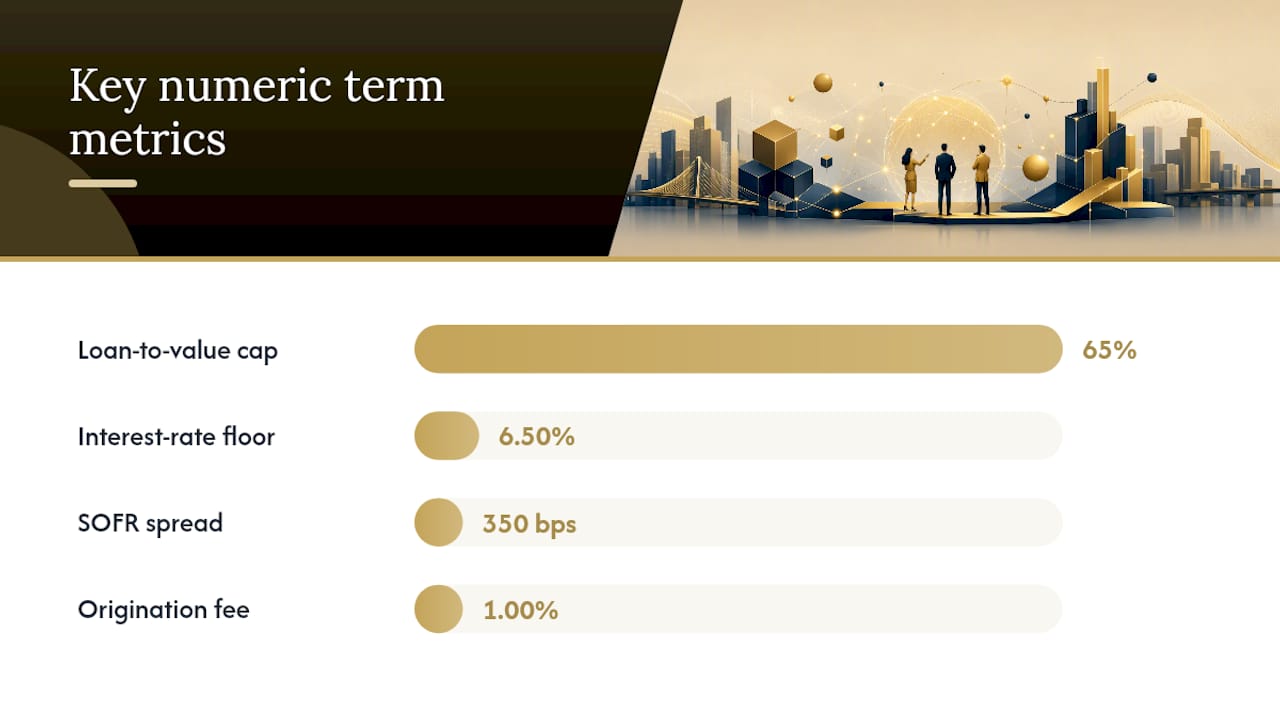
Borrowers rarely see a full term sheet before they’ve already engaged a lender, which makes the document feel more mysterious than it needs to be. Real-world examples do exist. An SEC-filed term sheet exhibit shows the kind of clause language and fee structure lenders actually use in financing facilities, and it’s worth a skim if you want to see the format before you’re staring at your own deal’s paperwork.
A typical excerpt, redacted for illustration, might read like this:
Loan Amount: $[REDACTED], not to exceed 65% of appraised value. Interest Rate: SOFR + 350 bps, 6.50% floor. Origination Fee: 1.00% of loan amount, due at closing. Guaranty: Limited recourse, with standard carve-outs for fraud, waste, and voluntary bankruptcy. Reporting: Borrower to deliver quarterly financial statements and annual budget within 45 days of period end.
Here’s what each line signals in practice:
- The 65% LTV cap is a starting point, not a floor. If the appraisal comes in below expectations, the loan amount shrinks to match, not the other way around.
- The SOFR floor protects the lender’s yield if rates drop, but it can quietly cost you more than a fixed-rate alternative if you’re negotiating during a falling-rate cycle.
- “Standard carve-outs” is vague on purpose. Ask for the actual carve-out list before you sign anything, because “standard” varies by lender and sometimes includes environmental liability or minor covenant breaches that shouldn’t trigger full recourse.
- The reporting cadence looks routine, but confirm whether late delivery triggers a default or just a fee, since some term sheets bury a cure period inside a cross-reference to loan documents you haven’t seen yet.
Terms tied to appraisal, title, and sponsor financials are the ones most likely to move once underwriting begins. Rate and fee structure tend to hold steadier, since they’re usually set by the lender’s cost of capital rather than diligence findings.
How Do You Negotiate a Lender Term Sheet?
Not every line item is worth fighting over, and spreading your leverage too thin across a dozen small asks weakens your position on the ones that matter. Prioritize in this order:
- Pricing and rate structure. Ask whether the spread is negotiable and whether a rate lock or extension option is available at issuance rather than as an amendment later.
- Leverage. If the LTV or LTC cap feels tight, ask what additional reserves or a slightly higher rate would buy you in loan proceeds.
- Guaranty scope. Push for a burn-off provision that converts full recourse to limited recourse after a DSCR or occupancy threshold is met for a set period.
- Covenant and reporting frequency. Quarterly reporting with a 45-day delivery window is standard; anything tighter is worth pushing back on, especially for a smaller sponsor without a dedicated accounting team.
Watch for these red flags before you counter: non-recourse carve-outs that aren’t itemized, reporting requirements with no defined cure period, fees that stack (origination plus a separate underwriting fee plus a commitment fee), and cure windows under 10 business days for financial covenant breaches. Any of these warrants a direct question to the lender and, in most cases, a call to counsel before you sign.
Pro Tip: Before you go back to the lender with a counter, have your entity structure, sponsor financials, and a rent roll ready. Lenders move faster on requests when they can see you’re already organized for single purpose entity requirements and underwriting, not stalling.
From Signed Term Sheet to Closed Loan: What Happens Next
Signing the term sheet triggers underwriting, not funding. The lender orders an appraisal, environmental report, and title search, usually at the borrower’s expense, while reviewing sponsor financials and entity documents in parallel. A commitment letter follows once underwriting clears, and unlike the term sheet, it’s typically binding on both sides.
Expect the closing checklist to include:
- Appraisal and environmental Phase I report
- Title commitment and survey
- Sponsor and guarantor financial statements
- Organizational documents for the borrowing entity
- Insurance certificates and, in many cases, an escrow or impound account setup for taxes and insurance
Title exceptions and slow-moving guarantor paperwork cause more closing delays than anything in the rate sheet.
What Happens If You Walk Away From a Term Sheet?
Because most commercial term sheets are non-binding on the core economic terms, walking away rarely creates direct legal liability the way breaking a signed loan agreement would. That said, “non-binding” almost never means “no consequences,” and a handful of term sheet provisions typically survive termination regardless of what happens with the deal itself.
Deposit and fee provisions are the first thing to check. Many term sheets require an upfront deposit to cover third-party costs like the appraisal and legal review, and that deposit is usually non-refundable once the lender has started incurring expenses, even if you back out before closing. Confidentiality and exclusivity clauses often survive too. Some term sheets include a 30 to 60 day exclusivity period where you agree not to shop the deal to other lenders, and breaching that during the term sheet’s life can expose you to a claim for the lender’s sunk costs.
The reputational cost matters more than most sponsors expect. Commercial real estate lending runs on relationships between sponsors, brokers, and capital sources, and a pattern of signing term sheets and walking without cause gets noticed, particularly with regional banks and debt funds that see the same sponsors and brokers repeatedly. A single withdrawal for legitimate reasons, like a bad appraisal or a financing contingency that didn’t clear, rarely damages your standing. A pattern of it will follow you into your next financing conversation, sometimes before you’ve even made the introduction yourself.
Can a Term Sheet Affect Your Credit or Future Financing?
Signing a lender term sheet itself typically does not appear on a personal or business credit report the way a closed loan does, since it’s a proposal rather than an extension of credit. But the process around it can still touch your credit profile in ways worth planning for.
Most lenders pull a credit report or run a background check as part of underwriting before or shortly after term sheet issuance, and depending on the lender and loan type, that can register as a hard inquiry. One inquiry rarely moves a score meaningfully, but shopping the same deal to five or six lenders simultaneously, each pulling credit separately, can add up.
The bigger impact is structural rather than score-based. The guaranty scope, covenant package, and leverage you accept in one term sheet becomes the baseline future lenders compare against. A sponsor who agreed to full recourse and tight quarterly covenants on one deal may find the next lender expects similar terms, simply because that’s now the visible track record. Conversely, negotiating a guaranty burn-off or limited recourse structure on one deal can make it easier to argue for similar treatment on the next one. This is one of the more overlooked reasons to negotiate the guaranty and recourse language carefully the first time rather than accepting boilerplate.
Do Bank, Non-Bank, and Private Equity Term Sheets Look Different?
Yes, and the differences go beyond just pricing. Bank term sheets tend to be the most conservative and the most detailed on covenant language, largely because, as Practical Law notes, bank term sheets often double as internal credit approval documents, not just borrower-facing proposals. That means more granular financial covenants, more reporting requirements, and less flexibility on structure, but generally the lowest rate for a qualifying sponsor.
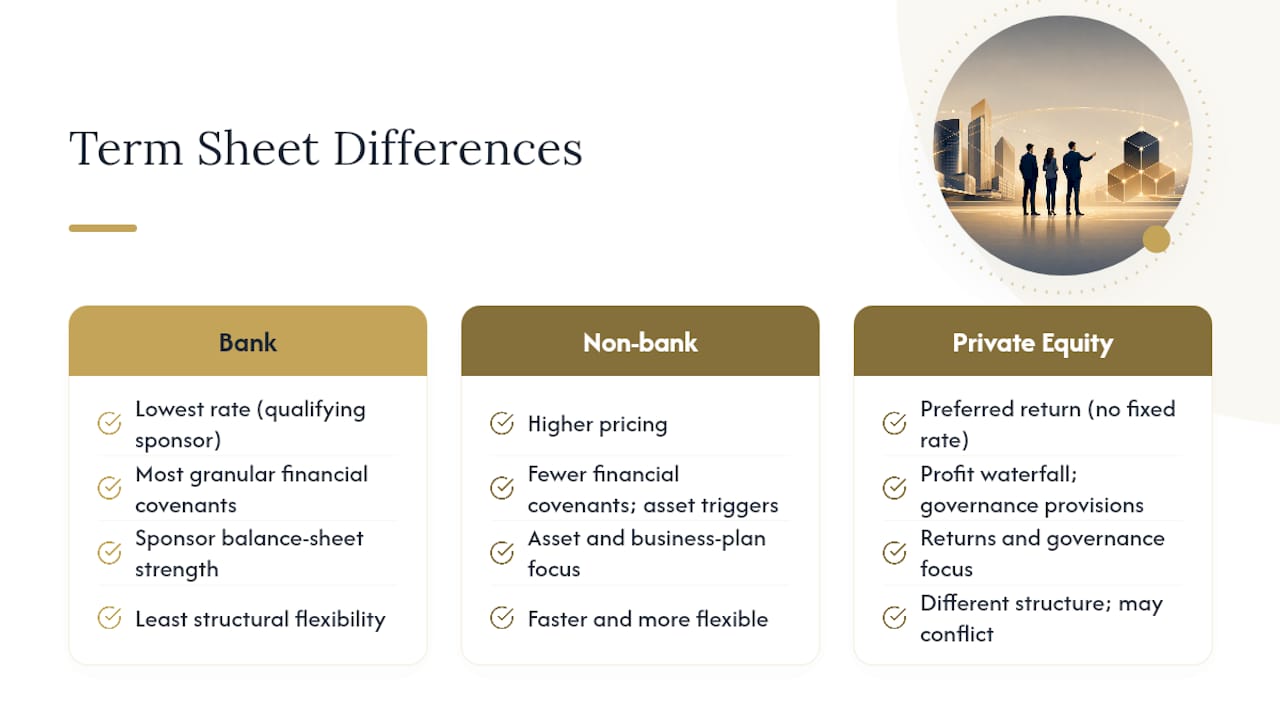
Non-bank and debt fund term sheets, common for bridge and construction financing, tend to move faster and price higher. Underwriting focuses more heavily on the asset and business plan than on sponsor balance sheet strength, and the term sheet often reflects that with fewer financial covenants but more asset-level triggers, like minimum leasing velocity or budget variance thresholds on a construction draw schedule.
Private equity and preferred equity term sheets look different again, since they’re not always structured as debt at all. Instead of a fixed rate, expect a preferred return, a waterfall structure describing how profits split above certain hurdles, and governance provisions around major decisions. If your capital stack includes a preferred equity piece alongside senior debt, the two term sheets need to be read together, since a covenant in one can conflict with a distribution right in the other.
Why Legal Counsel Reviews the Term Sheet Before You Sign
A term sheet is short by design, often five to ten pages, which is exactly why it’s risky to sign without counsel. Vague or “market standard” language that reads fine in a summary document can turn into a much more restrictive provision once it’s drafted into full loan documents.
Counsel typically focuses on a handful of areas: the actual list of non-recourse carve-outs, cross-default language that could tie this loan to your other financing, and any assignment or transfer restrictions that would limit your flexibility to bring in a new partner or refinance early. They’ll also flag ambiguous phrasing, terms like “commercially reasonable” or “at lender’s discretion,” that sound harmless in a term sheet but hand the lender significant control once they’re written into binding documents.
The cost of a legal review at the term sheet stage is small compared to renegotiating a covenant after you’ve signed a commitment letter, when your leverage has largely evaporated. Sponsors who bring counsel in early also tend to move faster through underwriting, since a lawyer who’s already flagged the ambiguous language can help you resolve it in a single round of comments rather than a back-and-forth that stretches into weeks.
Why Advisors Change the Outcome of a Term Sheet Negotiation
An advisor’s real value shows up before the term sheet even lands. Packaging a deal for institutional lenders and running competitive tension between two or three term sheets at once gives a sponsor leverage on rate, guaranty carve-outs, and extension mechanics that’s hard to replicate alone. We’ve seen sponsors trade a marginally higher rate for a meaningfully better recourse structure once a second lender is genuinely competing for the deal.
— Jerry
How Brookmont Capital Ventures Helps You Get to a Better Term Sheet
Getting a term sheet is one thing. Getting one with terms that actually fit your deal and your risk tolerance is a different exercise entirely, and it’s the one Brookmont Capital Ventures specializes in. We source lenders, negotiate the term sheet on your behalf, and package the deal so underwriting moves faster once you’re past the proposal stage.

Our team works across bridge loans, construction financing, DSCR loans, CMBS, and preferred equity, matching sponsors with banks, debt funds, and institutional capital sources based on what the deal actually needs, not just who responds first. That means running multiple term sheets in parallel when it strengthens your negotiating position, and structuring the guaranty and covenant package with the next financing round in mind, not just this one. If you’re evaluating a term sheet right now or preparing to go to market for financing, visit our commercial real estate financing solutions page and schedule a call with our advisory team before you sign anything.
Where to Read More on Term Sheets and Loan Documentation
For further reading, review the SEC-filed term sheet exhibit for real clause language, and check the commercial loan application checklist for a practical closing-document list.
Sources
- How Term Sheets Work For Commercial Real Estate Loans - PropertyMetrics
- Ex-99.1 Term Sheet (SEC exhibit)
- What is an escrow or impound account? - Consumer Financial Protection Bureau
- Term Sheets Overview: Lending | Practical Law
FAQ
What Is a Term Sheet From a Lender?
A lender term sheet is a proposal outlining the loan amount, rate, fees, and key conditions a lender is willing to offer, typically issued before formal underwriting begins and usually non-binding on the core economic terms.
What Is a Term Sheet Example?
A term sheet example typically includes loan amount and LTV cap, interest rate structure (fixed or SOFR-based floating), origination fee, maturity and amortization schedule, guaranty scope, and required financial covenants, similar to the redacted excerpt format shown in SEC-filed exhibits.
What Is a Term Sheet vs LOI?
A letter of intent (LOI) is often used earlier and more loosely to signal interest in a deal, while a lender term sheet is more detailed, focused specifically on loan economics and conditions, and typically serves as the direct basis for underwriting.
Who Prepares a Term Sheet?
The lender prepares and issues the term sheet, though sponsors working with an advisor like Brookmont Capital Ventures often negotiate specific terms before signing, and in institutional deals, legal counsel on both sides reviews the language before it moves to a commitment letter.