
Many credit unions do make commercial loans, including term loans, lines of credit, equipment financing, commercial real estate, and in some cases construction or bridge financing. Pricing and fees vary by lender. Membership is required, and NCUA member-business lending rules shape limits and structure. Expect underwriting on business cash flow, collateral, and possibly a personal guarantee, depending on the lender’s policy.
TL;DR:
- Membership eligibility comes first, and NCUA rules aggregate your borrowing with entities associated with you, potentially reducing the credit union’s available capacity.
- Match the product to the asset: equipment loans use the equipment as collateral, while credit lines usually secure receivables or inventory and renew annually.
- Compare two or three credit unions, then request written term sheets covering the rate index, spread, DSCR covenants, prepayment penalties, and recourse.
- Prepare ownership details, tax returns, financial statements, and a debt schedule; real estate and construction files take longer because of appraisal, title, and committee review.
Table of Contents
- Which credit union commercial loan types fit your use case?
- How do credit unions compare with banks on rates, fees, and flexibility?
- What are the eligibility and underwriting rules?
- What terms, amounts, and collateral should you expect?
- How do you apply, and how long does it take?
- Packaging priorities that move credit union approvals
- Where credit union debt belongs in a capital stack
- How we help you secure the right commercial loan
- FAQ
- Sources
Which credit union commercial loan types fit your use case?
Credit unions typically organize business lending around a handful of products, and underwriting depth changes with each.
- Term loans: fixed-purpose financing with a set amortization, usually secured by business assets or real estate.
- Lines of credit: revolving working capital, typically sized to receivables and inventory and renewed annually.
- Equipment financing: secured by the asset itself, with the term aligned to its useful life. The collateral may be easier to value, depending on the asset and lender.
- Commercial real estate loans: owner-occupied and investor properties, with appraisals, liens, and title work.
- Construction and bridge loans: short-duration financing tied to a build or a transition, which means draw schedules and closer monitoring.
Term loans and lines lean on your cash flow and the strength of the borrowing entity. Commercial real estate, construction, and bridge files are larger and slower, and they vary with the size of the credit union. A smaller institution may have a newer commercial portfolio and fewer underwriters, so it may keep some deal types out of its box. Matching the product to the use case before you approach a lender can help focus your search.
How do credit unions compare with banks on rates, fees, and flexibility?
Credit unions are member-owned cooperatives, but their pricing and fees on commercial loans vary by institution. Their business lending has also grown from existing institutions adding services: research from the Consumer Financial Protection Bureau finds that the share of credit unions offering small business lending roughly doubled since 2004 because existing institutions expanded, not because many new entrants appeared.
Banks across the market have tightened commercial real estate standards, according to the Federal Reserve’s October 2025 Senior Loan Officer Opinion Survey. That may lead some borrowers to consider lenders with different risk tolerances, including credit unions.
- Prioritize a credit union when the deal is cost-sensitive, when you value a relationship lender, or when the property is straightforward.
- Consider another lender when you need scale, a wide product menu, or complex structuring across several property types.
Results vary by institution, so compare two or three before committing.
What are the eligibility and underwriting rules?
The first hurdle is membership. You generally must qualify for membership before you can borrow, commonly through geography, employer, association, or a community charter. The second is regulatory. Under NCUA’s Part 723, which modernized member-business lending to a principles-based framework, credit unions must manage aggregate exposure against their net worth, and that caps what any one borrower can receive.
Underwriting steps you should expect:
- Membership confirmation before any loan is booked.
- Associated-borrower review: NCUA guidance on the associated borrower test requires the credit union to aggregate exposure to a borrower and anyone associated with that borrower.
- Cash flow and collateral analysis, including debt service coverage and lien position.
- Guarantee decision: personal guarantees are common, and Part 723 gives lenders flexibility to waive them under some conditions, provided they document the mitigating factors.
Pro Tip: Disclose every entity you control or co-own at the start. Associated-borrower aggregation can mean a credit union’s available capacity is smaller than a sponsor expected.
For background on how lenders treat guaranties, this overview of SBA personal guarantees is a practical read.
What terms, amounts, and collateral should you expect?
Terms follow the asset. Commercial real estate and construction loans run longer than equipment or working-capital facilities, and some credit unions advertise business loans up to $5M on certain products, though ceilings differ by institution and are reduced by the aggregation rules above.
- Commercial real estate: a first lien on the property, an appraisal, and frequently a guarantee from principals.
- Equipment loans: a lien on the financed asset, usually with a shorter term.
- Lines of credit: a blanket lien on receivables or inventory.
- Index choice: whether the rate floats on SOFR or Prime affects payment stability, as our primer on SOFR versus Prime explains.
The SBA 7(a) program provides guarantees that let participating lenders make loans up to $5 million for a range of business purposes. For real estate and heavy equipment, 504 loans pair long-term, fixed-rate financing from Certified Development Companies with a senior lender. For a comparison of structures, see this owner financing versus bank loan guide. Interest rate and fee quotes vary by credit union and deal, so request a written term sheet before you compare.
How do you apply, and how long does it take?
Preparation drives speed. Gather these before you contact the lender:
- Proof of membership or eligibility.
- Business formation documents and ownership details.
- Recent business and personal tax returns.
- Current financial statements and a debt schedule.
- For real estate: rent rolls, a pro forma, and a property summary.
- For equipment: the vendor invoice or quote.
Timelines depend on file size. Equipment and lines of credit tend to close sooner, while commercial real estate and construction take longer because of appraisals, title, and credit committee review. Complete financials, a clear DSCR, and a well-organized package are what shorten the path. Our underwriting checklist for sponsors walks through what lenders review.
Ask each lender about the rate index and spread, DSCR covenants, prepayment penalties, and recourse terms before you sign a term sheet.
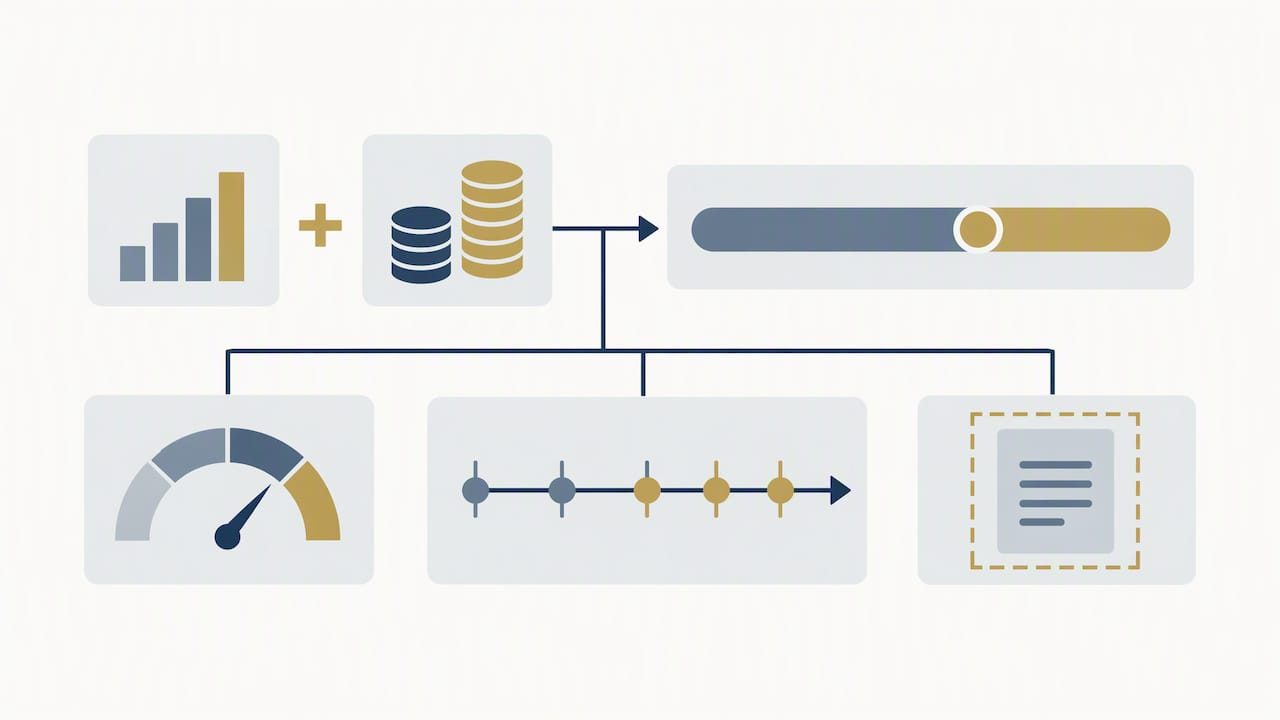
Pro Tip: Reconcile your DSCR using actual and underwritten figures before submission. Our guide to DSCR packaging shows how.
Packaging priorities that move credit union approvals
Credit unions prize a clear repayment source and honest disclosure. In our experience placing debt for sponsors, these priorities matter most:
- An executive summary that states the request and the repayment source.
- Realistic pro formas that tie back to a DSCR reconciliation.
- A collateral schedule with title status.
- Upfront disclosure of associated borrowers.
Professional packaging and lender matching can help organize a financing request, especially on larger files, as we describe in our piece on middle market financing packages.
Where credit union debt belongs in a capital stack
We favor credit union financing when pricing and relationship value matter and the deal fits the lender’s profile, such as owner-occupied real estate or well-documented stabilized assets. When a project needs speed, higher leverage, or construction flexibility beyond a credit union’s appetite, we look to other sources. Our approach is to size the debt first, then match the lender, so the capital stack holds together under scrutiny.
— Jerry
How we help you secure the right commercial loan
If you want professional help placing a credit union commercial loan, our team supports sponsors across the full process:
- Underwriting and feasibility: a lender-grade view of your deal before it goes out.
- Deal packaging for lenders: a clean, complete file that answers questions in advance.
- Debt placement: introductions to credit unions and institutional lenders that fit your asset.
- Capital stack advisory: debt sized and layered to hold up.
We help you connect with lenders and prepare for term negotiations. Explore our financing solutions or our advisory services, and talk with us about your next deal.
FAQ
What credit score do you need to get a commercial loan?
There is no single cutoff, because credit unions weigh business cash flow, collateral, and guarantor strength alongside personal credit. Credit score requirements and their effect on pricing and terms vary by institution.
Are credit unions or commercial banks better for business loans?
Pricing, fees, scale, and product breadth vary by lender. The better choice depends on your deal size, property type, and how much you value the relationship.
Do credit unions require personal guarantees?
Often yes, but not always. Under NCUA’s member-business lending framework, a credit union may waive a guarantee in some conditions if it documents the mitigating factors.
Why might a credit union cap my loan size?
Credit unions must aggregate exposure to a borrower and associated borrowers, and total member-business lending is measured against their net worth. That aggregation can limit what a single borrower receives.
Sources
- The Fed - The October 2025 Senior Loan Officer Opinion Survey on Bank Lending Practices
- Associated Borrower
- 7(a) loans - Small Business Administration
- NCUA Board Modernizes Member-Business Lending Rule to Provide Flexibility | NCUA