
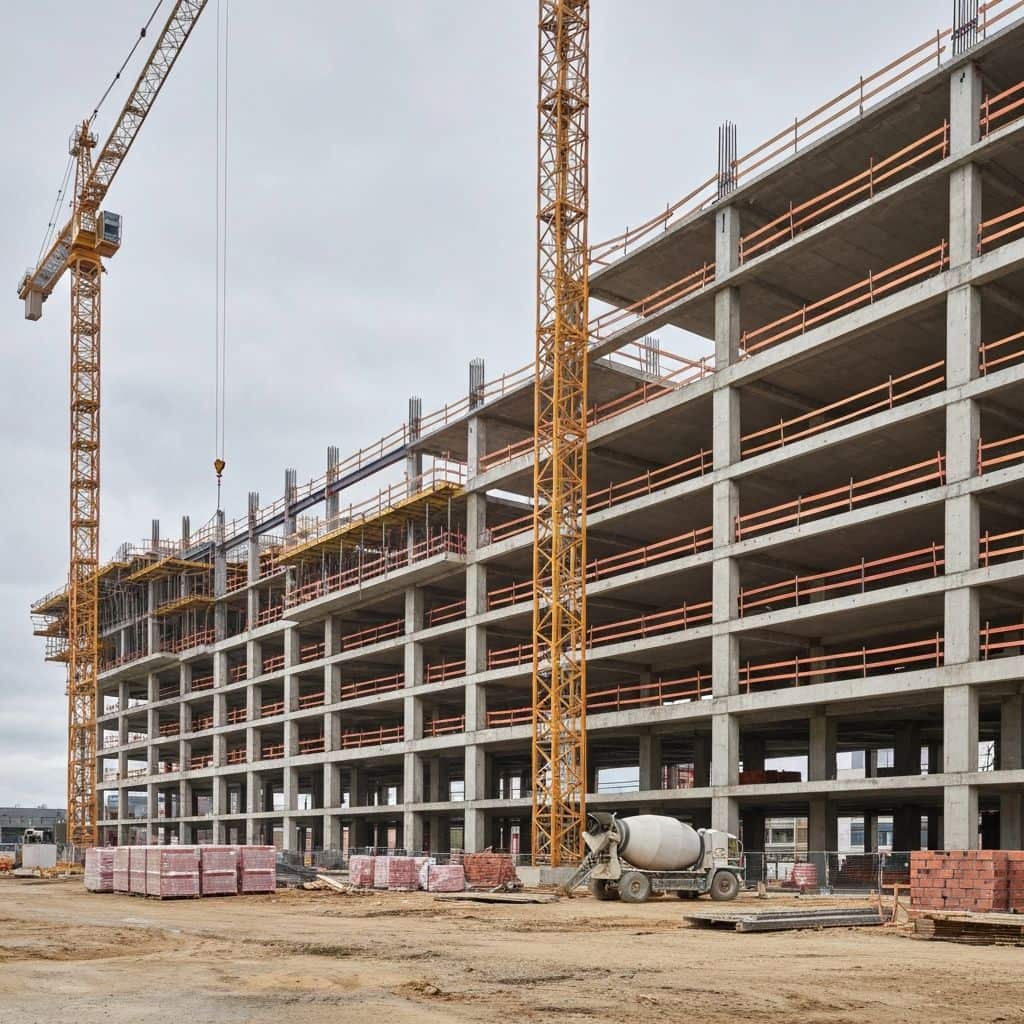
If you are a commercial real estate investor or developer planning a ground-up project, a substantial renovation, or even a moderate capital improvement program in 2026, your cost assumptions from eighteen months ago are almost certainly wrong. The tariff environment that has evolved since early 2025 has fundamentally altered the cost structure of CRE development, and the effects are being felt most acutely in the $500K to $5M deal segment where margin for error is thinnest.
This is not a theoretical concern. Steel and aluminum now carry a 50% tariff. Copper — a material embedded in virtually every electrical, plumbing, and HVAC system in a commercial building — is subject to the same rate. Kitchen cabinets and vanities from certain countries face tariffs as high as 25%. Softwood lumber carries a 10% tariff, with many derivatives taxed at 25%. These are not rounding errors. For a mid-rise multifamily project, steel-intensive scopes alone are carrying an embedded tariff cost of approximately $15 to $25 per square foot, depending on structural system and equipment mix.
Current tariff policies have increased CRE construction material costs by approximately 6% relative to 2024 baselines, with total project costs rising an estimated 3%. For projects already operating on thin margins, this can be the difference between a deal that pencils and one that does not.
The Current Tariff Landscape for CRE Construction
The tariff regime affecting commercial real estate construction in 2026 is the product of multiple overlapping policy actions. Understanding the full picture requires looking beyond any single headline.
Metals Are the Biggest Cost Driver
The most significant tariff impact on CRE construction comes from metals. Steel, aluminum, and copper products face a 50% tariff on items made entirely or mostly from these metals, with a 25% tariff on derivatives made substantially from them. For commercial construction, this affects structural steel, rebar, electrical wiring, conduit, plumbing fixtures, HVAC ductwork, roofing materials, and mechanical equipment. The producer price index for the construction industry increased by 2.8% in 2025 — the fastest growth rate since 2023 — and tariff-driven material cost increases are expected to continue applying upward pressure through the remainder of 2026.
Building Components Face Layered Tariffs
Beyond raw metals, finished building components are subject to their own tariff schedules. Kitchen cabinets and vanities from certain trade partners carry tariffs of up to 25%, with rates on some products scheduled to increase further. Gypsum — the mineral used in drywall — faces significant tariff exposure because more than half of U.S. gypsum imports come from Canada and Mexico. Doors, windows, and frames face similar pressures. For investors planning value-add renovations, where unit upgrades are the primary driver of rent increases, these component-level tariffs directly erode the return on improvement capital.
Policy Volatility Compounds the Problem
The challenge is not just the current tariff rates — it is the ongoing volatility. Trade policy has shifted multiple times over the past twelve months, with rates on certain partners moving from 0% to 10% to 25% and back within weeks. This volatility makes it exceptionally difficult to lock in pricing for construction contracts, and it introduces a risk that traditional underwriting models were never designed to capture. Contractors are increasingly reluctant to hold fixed pricing for extended periods, and suppliers are building tariff adjustment clauses into their quotes. For investors who need cost certainty to secure financing and close on projects, this environment demands a fundamentally different approach to procurement and budgeting.
How Tariffs Are Affecting Different Project Types
Ground-Up Development
For new construction projects, tariff-driven cost increases are compressing development margins and, in some cases, killing deals entirely. A multifamily project that was underwritten at $180 per square foot in hard costs eighteen months ago may now require $190 to $200 per square foot to deliver the same scope — a difference that can eliminate hundreds of thousands of dollars in projected returns on a $3M to $5M project. Data center construction, which relies heavily on copper and specialized electrical equipment, faces the highest tariff exposure of any CRE asset type.
Value-Add Renovations
Investors pursuing value-add strategies — buying underperforming assets, renovating units, and increasing rents — face a more targeted but equally consequential impact. The cost of unit renovations has increased materially, particularly for projects that rely on imported cabinets, countertops, fixtures, and appliances. For a typical value-add multifamily deal where unit renovation budgets are $15,000 to $25,000 per unit, even a 10% to 15% increase in renovation costs can meaningfully change the return profile and extend the timeline to stabilization.
Capital Improvements and Repositioning
For investors making capital improvements to stabilized assets — roof replacements, HVAC upgrades, parking lot resurfacing, elevator modernization — the tariff environment means that deferred maintenance is becoming more expensive with each passing quarter. Investors who have been delaying capital expenditures in hopes that costs would moderate are finding that the opposite is occurring.
What Smart Investors Are Doing Right Now
Locking Materials Early
Experienced developers are pre-purchasing or reserving critical materials — particularly steel, copper, and electrical components — as early in the project timeline as possible. While this requires additional upfront capital and carrying costs, it provides cost certainty that is increasingly difficult to achieve through standard procurement timelines.
Renegotiating Contract Structures
Fixed-price construction contracts are becoming harder to secure, and when they are available, contractors are building significant contingencies into their pricing to hedge against further tariff changes. Many investors are shifting toward cost-plus or guaranteed maximum price contracts with clearly defined tariff escalation provisions. This shifts some cost risk to the investor but typically results in lower base pricing because contractors are not forced to build worst-case tariff assumptions into their bids.
Redesigning Scopes to Reduce Tariff Exposure
Some developers are working with architects and engineers to redesign building systems in ways that reduce reliance on the most heavily tariffed materials. This might mean substituting wood framing for steel in certain applications, specifying domestically manufactured fixtures and components where quality is equivalent, or phasing renovation programs to take advantage of anticipated trade agreement developments.
Building Tariff Contingencies Into Underwriting
The most fundamental adjustment is in underwriting itself. Investors who are still using pre-2025 cost assumptions or running pro formas without a dedicated tariff contingency line item are taking on risk they may not fully appreciate. A tariff contingency of 3% to 5% of hard costs is becoming standard practice among sophisticated sponsors, and lenders are increasingly expecting to see it in project budgets.
The Financing Implications
Tariff-driven cost increases have real consequences for project financing. Higher total development costs mean larger loan requests relative to projected stabilized values, which can push leverage ratios above lender comfort levels. Bridge lenders and construction lenders are scrutinizing cost budgets more carefully and, in many cases, requiring larger contingency reserves before committing capital. For investors relying on construction or bridge financing, this means more equity is required — either from the sponsor, from co-investors, or from structured capital sources like preferred equity or mezzanine debt.
The investors who will navigate this environment most successfully are those who treat tariff risk the same way they treat interest rate risk or lease-up risk — as a quantifiable variable that must be modeled, monitored, and managed, not ignored.
Need Help Structuring a Development or Renovation Budget in the Current Tariff Environment?
Our team helps CRE investors and developers in the $500K–5M range structure capital strategies that account for rising construction costs and evolving market conditions. Let us help you stress-test your project economics and identify the right financing approach.
Brookmont Capital Ventures is a commercial real estate debt and equity advisory firm headquartered in Washington, DC. The firm provides capital structuring, financing strategy, and advisory services to real estate owners, developers, and investors across a broad range of asset types and transaction structures.