
The Multifamily Supply Cliff Is Here: Why the Next 18 Months Will Reward Patient CRE Investors
Multifamily deliveries are projected to fall 36% in 2026 to approximately 333,000 units — the lowest annual total since 2014. For CRE investors in the $500K–5M range, this supply contraction is creating the most favorable acquisition and development window the apartment market has offered in years.
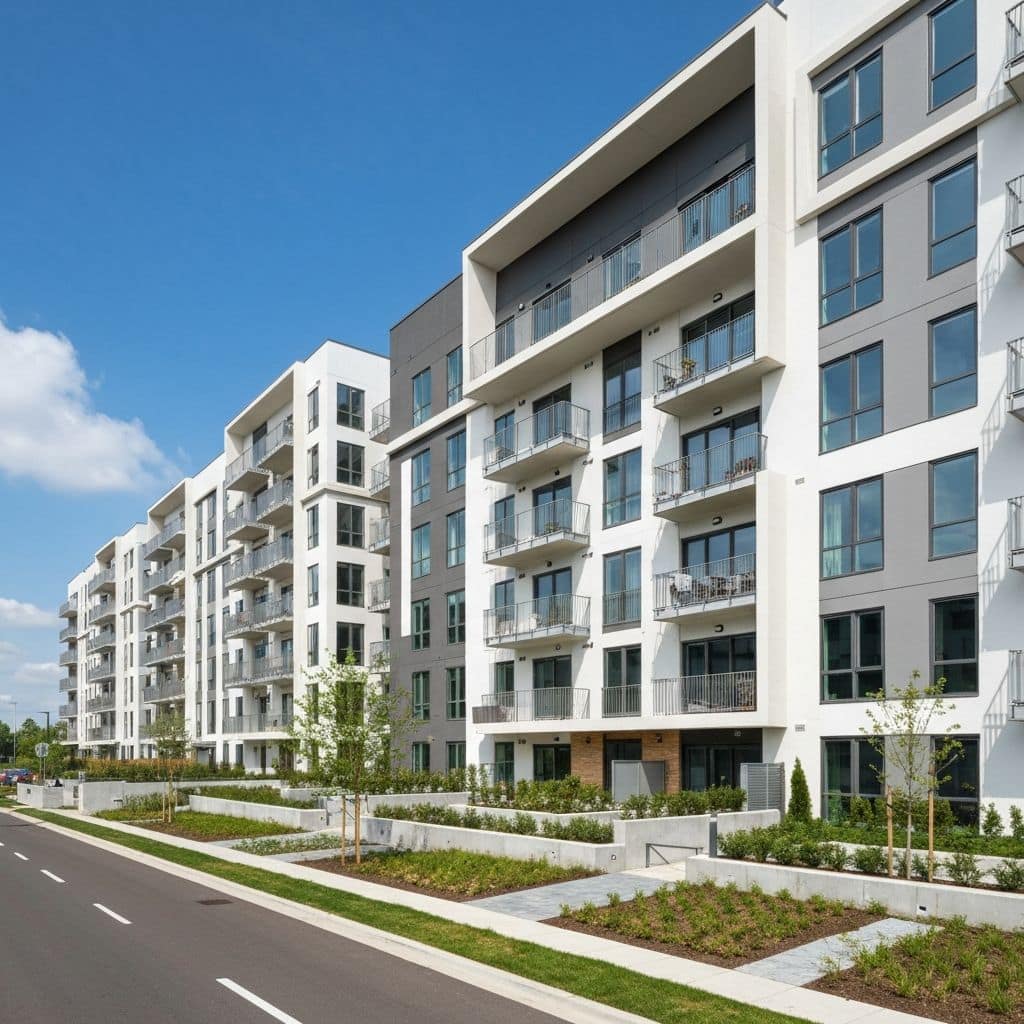
The multifamily sector has spent the past two years absorbing the consequences of an unprecedented construction boom. Between 2021 and 2024, the apartment market experienced its most significant supply expansion in four decades, peaking with more than 700,000 units delivered in a single year. The result was predictable — vacancy rates climbed to 8.5% nationally, rent growth stalled, and investors in oversupplied markets watched their underwriting assumptions erode.
That cycle is now reversing, and it is reversing fast. Construction starts have plummeted to their lowest level in more than a decade, and the pipeline of projects under construction is shrinking rapidly. Annual deliveries declined roughly 25% in 2025 and are forecast to contract an additional 36% in 2026. By 2027 and 2028, new supply will be a fraction of what the market has absorbed over the past several years.
For investors who have been waiting for the right entry point — particularly those in the $500K to $5M range who depend on operational execution rather than market timing for returns — the window is opening.
Multifamily construction starts have fallen more than 70% from their 2022 peak. Projects started today will deliver into what is shaping up to be one of the most favorable rent-growth environments of the decade.
Understanding the Supply Dynamics
How We Got Here
The apartment construction boom that began in 2021 was fueled by historically low interest rates, strong migration-driven demand in the Sun Belt and Mountain West, and permissive entitlement environments in high-growth markets. Capital flowed into multifamily development at an extraordinary pace, and starts reached nearly 708,000 units in 2022 — a volume the market had not seen in decades.
The correction was driven by several converging forces. Rising interest rates made construction financing more expensive and harder to obtain. Material costs surged. Oversupplied markets began posting negative rent growth, which undermined the pro forma assumptions that had justified new starts. Banks tightened construction lending standards significantly. The result was a dramatic pullback in new starts that is now flowing through to deliveries.
The Numbers That Matter
The supply story can be summarized in a few critical data points. Deliveries peaked at over 700,000 units in 2024 and declined to approximately 523,000 in 2025. The forecast for 2026 is roughly 333,000 units — a level not seen since 2014. Several major Sun Belt markets are seeing particularly steep declines:
- Austin deliveries are projected to drop 47% in 2026
- Denver supply is expected to be cut by more than half
- Phoenix faces an additional 40% decline after an 18% reduction in 2025
Meanwhile, the structural demand for rental housing has not diminished. The homeownership affordability gap remains wide, with mortgage costs continuing to push would-be buyers into the rental market. The National Multifamily Housing Council estimates that the U.S. needs to build 4.3 million new apartments by 2035 to address the structural housing shortage. The gap between what the market needs and what the development pipeline will deliver over the next several years is substantial.
Geographic Divergence Is the Defining Theme
Not all markets are experiencing this supply shift equally. The two-Americas narrative that has defined multifamily performance since 2024 continues, but the dynamics are beginning to evolve.
In the Northeast and Midwest, where construction was limited even during the boom years, markets like New York, Chicago, Philadelphia, and Kansas City have maintained stronger occupancy and posted above-average rent growth. These markets are projected to see rent increases of 4% to 5% in 2026, supported by constrained supply and steady demand from return-to-office trends and affordability advantages.
In the Sun Belt and Mountain West, the recovery will take longer. Markets like Austin, Phoenix, Tampa, and Nashville are still working through elevated vacancy and lease-up pressure from recent deliveries. However, the sharp decline in new starts means that these markets will transition from oversupplied to supply-constrained within the next 18 to 24 months. Investors who acquire assets in these markets at today's discounted pricing and compressed rents stand to benefit significantly as fundamentals tighten.
What This Means for $500K–5M Investors
Acquisition Opportunities in Oversupplied Markets
The most compelling near-term acquisition opportunities are in markets where oversupply has created pricing dislocation. Properties that were developed or acquired at peak valuations in 2021 and 2022 are now trading at meaningful discounts. Sellers who are facing loan maturities, extended lease-up timelines, or capital calls they cannot fund are increasingly willing to transact below replacement cost.
For investors with the capital and operational capability to acquire these assets, renovate or stabilize them, and hold through the supply correction, the return potential is significant. The key is underwriting to current market rents and occupancy — not to the optimistic projections that characterized the boom — and ensuring that the capital structure provides enough runway to reach stabilization without refinancing pressure.
Development Timing Is Favorable
For investors considering ground-up development, the current environment offers a strategic advantage that may not persist. Projects started in 2026 will deliver in 2028 or 2029, precisely when the supply pipeline will be at its most constrained. Fewer competing projects means faster lease-up, stronger rent growth, and better stabilized values at delivery.
The challenge is execution. Construction costs remain elevated due to tariffs and labor constraints, and construction financing is selective. But for sponsors who can assemble the right capital structure and deliver a quality product in the right submarket, the development timing is as favorable as it has been in years.
Rent Growth Will Return — But Unevenly
National rent growth is projected to reach approximately 2% in 2026, accelerating to 3.4% to 3.8% by 2028. But the national average obscures significant geographic variation. Investors need to underwrite at the market and submarket level, not the national level.
Markets with constrained supply and steady demand — particularly in the Northeast and Midwest — are already posting meaningful rent growth. Sun Belt markets will recover, but the timeline varies. Charlotte, Houston, and Las Vegas are projected to lead Sun Belt rent recovery, while Austin, Phoenix, and Denver will take longer to absorb excess inventory.
How to Position Your Portfolio
Target the Inflection
The most disciplined approach is to identify markets that are at or near the inflection point — where supply is declining but pricing has not yet adjusted upward. This requires a granular understanding of local delivery pipelines, absorption trends, and lease-up timelines. Markets where vacancy has peaked and new deliveries are declining sharply offer the best combination of value pricing and improving fundamentals.
Focus on Class B and Workforce Housing
Class A properties in oversupplied markets bore the brunt of the supply cycle, with new luxury product competing for a limited pool of high-income renters through aggressive concessions. Class B and workforce housing properties — particularly those serving the middle-income renter demographic — have maintained stronger occupancy and steadier rent performance throughout the cycle. These assets offer more predictable cash flows and lower downside risk, making them well suited for investors in the $500K to $5M range.
Secure Financing Before the Window Narrows
As fundamentals improve and transaction activity increases, competition for both assets and financing will intensify. Government-sponsored enterprises received a 20.5% increase in lending caps for 2026, and agency, CMBS, and life company lenders are actively deploying capital. Investors who move early — with pre-approved financing, clear underwriting parameters, and operational readiness — will have a meaningful advantage over those who wait for confirmation that the market has turned.
The supply correction now underway will fundamentally reshape the competitive landscape over the next three to five years. Investors who position themselves now — with disciplined underwriting and patient capital — will be best positioned to capture the upside.