
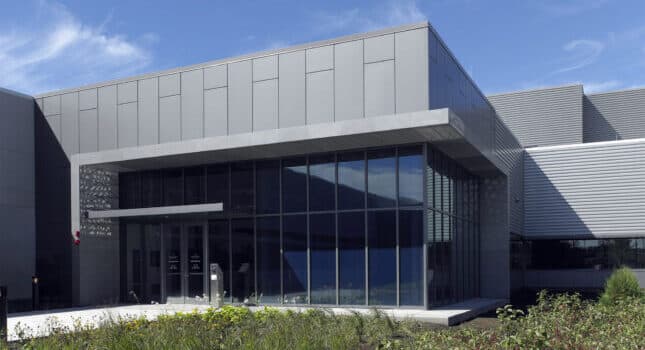
Few asset classes have reshaped institutional real estate portfolios as quickly—or as decisively—as data centers.
What was once a niche segment of alternative real estate has become one of the most sought-after property types globally. In a period when traditional sectors such as office and speculative development have struggled, data center real estate has delivered resilient income, valuation stability, and outsized returns.
This is not a coincidence. It is the result of structural demand that transcends economic cycles.
Why Data Centers Are Physical Infrastructure, Not Virtual Assets
A common misconception is that data lives "in the cloud." In reality, data lives in physical buildings—powered, cooled, secured, and operated with extreme precision.
Every advance in artificial intelligence, cloud computing, streaming, e-commerce, and digital communication increases the need for physical data infrastructure. AI workloads in particular are extraordinarily power-intensive, requiring specialized facilities with access to reliable energy, fiber connectivity, and redundancy.
This has turned data center real estate into the backbone of the modern economy—and into mission-critical infrastructure.
Why Data Center Real Estate Outperforms Other CRE Sectors
Several characteristics distinguish data center investments from traditional commercial property types:
Sticky Tenancy and High Switching Costs
Once a tenant installs equipment, migrating to another facility is expensive, disruptive, and risky. Lease terms are long, renewals are common, and vacancy risk is structurally lower than in most CRE sectors.
Exceptional Tenant Credit Quality
Many data center tenants are investment-grade technology firms, hyperscale cloud providers, or enterprise users with global balance sheets. Names like Amazon, Microsoft, Google, and Meta anchor the largest facilities.
Embedded Pricing Power
Power availability, zoning constraints, and infrastructure requirements create natural barriers to entry. In many markets, demand far exceeds supply, giving landlords leverage on renewal terms.
Recession-Resistant Cash Flows
Data usage does not decline in recessions. If anything, digital reliance increases during economic stress—a dynamic proven during the 2020 pandemic and subsequent market volatility.
Capital Stack Dynamics in Data Center Investment
While returns have been attractive, data center investments are not simple. Development costs are high. Power infrastructure is expensive. Entitlements are complex. Timelines are long.
As a result, the capital stacks behind these projects differ meaningfully from traditional real estate:
- ✓Equity contributions are typically higher than conventional CRE deals.
- ✓Debt structures are more conservative, with lenders focused heavily on power contracts, tenant pre-leasing, and sponsor experience.
- ✓Private capital has played an outsized role in this space precisely because it can tolerate complexity in exchange for long-term certainty.
For sponsors pursuing data center development or acquisition, institutional-grade underwriting and clear power procurement strategies are non-negotiable.
Lessons for CRE Investors Outside the Data Center Space
Not every investor will own data centers directly. But the asset class offers important lessons that apply broadly across commercial real estate investment strategy.
Institutional capital is increasingly attracted to assets featuring:
- •Non-discretionary demand drivers
- •Long-duration tenancy with high switching costs
- •Infrastructure-like cash flow profiles
- •Real barriers to competitive entry
These principles can be applied to logistics and industrial real estate, life science facilities, energy-adjacent properties, and mixed-use developments when structured correctly.
The takeaway is not "buy data centers." It is: think like an infrastructure investor.
AI Demand Makes Data Center Growth Structural, Not Cyclical
Unlike prior real estate booms driven by financial conditions, the rise of data center real estate is driven by technological inevitability.
Artificial intelligence, cloud computing, and digital services are not passing trends. They are foundational to modern commerce. AI model training alone requires exponentially more computing power than traditional workloads—and that power needs physical homes.
As long as data consumption grows—and all indicators suggest it will accelerate—the physical infrastructure supporting it will remain in demand. That is why institutional investors are treating data centers not as an opportunistic trade, but as a core portfolio allocation.
The Brookmont Capital Perspective
At Brookmont Capital Ventures, we view the success of data centers as a signal, not an anomaly.
Capital is flowing toward assets where demand is unavoidable, cash flows are durable, and execution risk is understood. Whether advising on acquisitions, recapitalizations, or development capital, our focus remains the same: align capital structure with long-term fundamentals.
In today's market, the best-performing real estate is not defined by headlines—it is defined by necessity.
About Brookmont Capital Ventures
Brookmont Capital Ventures specializes in commercial real estate debt advisory and structured finance solutions across the DC, Maryland, and Virginia markets. For capital advisory services ranging from $200K to $15M+, contact us at Jerry@brookmontcapital.net or visit brookmontcapital.net.