
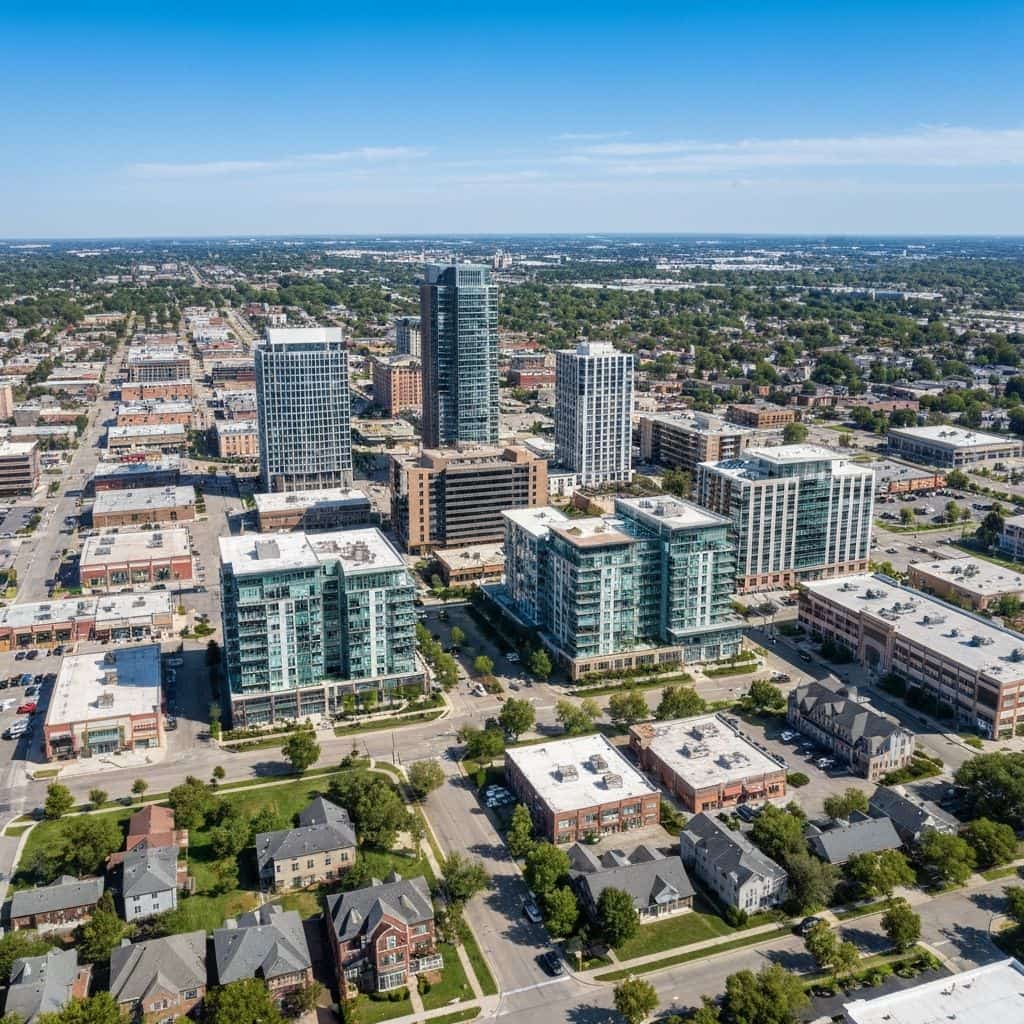
Capital is migrating from gateway cities to secondary and tertiary markets at an accelerating pace. For CRE investors in the $500K–5M range, markets like Raleigh-Durham, Charlotte, Salt Lake City, and Columbus are offering stronger fundamentals, higher yields, and lower barriers to entry than their primary market counterparts.
For decades, the conventional playbook for commercial real estate investing centered on gateway markets — New York, Los Angeles, San Francisco, Chicago, and Washington, DC. These markets offered institutional-grade assets, deep tenant demand, and the perception of lower risk through sheer market size and liquidity. For small-balance investors, the challenge was always the same: the barriers to entry were high, the competition was fierce, and the yield compression in these markets often made it difficult to generate returns that justified the capital at risk.
That dynamic has shifted meaningfully. The combination of remote work adoption, demographic migration, rising operating costs in major metros, and a growing institutional appetite for primary market assets has created a strategic opening for $500K to $5M investors in secondary and tertiary markets. These are not speculative bets on emerging frontiers — they are established metropolitan areas with diversified economies, strong population growth, quality infrastructure, and increasingly attractive real estate fundamentals.
The investors who are generating the most compelling risk-adjusted returns in 2026 are not competing for assets in Manhattan or downtown DC. They are deploying capital in markets where the supply-demand dynamics favor operators, where acquisition pricing still allows for attractive cash-on-cash returns, and where the competitive landscape is far less crowded.
Capital is increasingly gravitating toward metros with regulatory or geographic construction constraints, stable employment bases, and balanced development pipelines. Secondary markets are no longer the alternative — for small-balance investors, they are becoming the primary opportunity set.
Why the Capital Migration Is Accelerating
Demographic Shifts Are Structural, Not Cyclical
The population migration that began during the pandemic has proven to be a durable structural trend, not a temporary disruption. Households and businesses continue moving from high-cost, high-regulation states to regions offering lower costs of living, favorable tax environments, and strong quality-of-life attributes. This migration is driving sustained demand for housing, retail, office, and industrial space in secondary markets across the Southeast, Mid-Atlantic, Mountain West, and parts of the Midwest.
Markets like Raleigh-Durham, Charlotte, Nashville, Tampa, Columbus, Salt Lake City, and Boise are not just receiving population inflows — they are attracting the types of employers and industries that generate long-term, high-quality demand for commercial real estate. Technology companies, healthcare systems, financial services firms, and advanced manufacturing operations are expanding in these markets, creating a diversified economic base that supports real estate demand across multiple asset classes.
Yield Spreads Favor Secondary Markets
One of the most compelling reasons for small-balance investors to focus on secondary markets is yield. Cap rate compression in gateway markets has made it exceptionally difficult to acquire stabilized assets at yields that provide meaningful cash flow after debt service. In contrast, secondary markets continue to offer materially higher going-in cap rates — often 100 to 200 basis points above comparable assets in primary markets.
For an investor acquiring a stabilized multifamily property, the difference between a 5.0% cap rate in a gateway market and a 6.5% cap rate in a secondary market translates directly into stronger day-one cash flow, lower breakeven occupancy, and a larger cushion against market softening. When combined with strong demand fundamentals and lower operating costs, these yield advantages compound over time.
The Competitive Landscape Favors Small-Balance Investors
In gateway markets, $500K to $5M investors are competing against institutional capital, private equity funds, and REITs with significant cost-of-capital advantages and established operating platforms. In secondary markets, the competitive dynamics are fundamentally different. Institutional capital tends to focus on larger transactions — typically $25M and above — which means that the small-balance segment of secondary markets is served primarily by local and regional investors, many of whom lack access to sophisticated capital advisory, structured financing, and institutional-quality underwriting.
This is precisely the segment where a well-capitalized, well-advised small-balance investor can create the most value. The ability to move quickly, make decisions without committee approval processes, and bring creative capital solutions to transactions gives smaller investors a meaningful competitive advantage in markets where the largest institutional players are not actively competing.
Markets Worth Watching in 2026
Southeast Growth Corridors
The Southeast continues to lead in population growth, job creation, and economic diversification. Charlotte and Raleigh-Durham stand out for their combination of strong demographic tailwinds, expanding technology and financial services sectors, and manageable construction pipelines. Charlotte in particular is projecting rent growth above 5% in the near term, supported by resilient absorption and a significant decline in new construction starts. Greenville, South Carolina has emerged as another compelling submarket, benefiting from manufacturing investment, affordability, and infrastructure upgrades.
Mid-Atlantic Strength
The broader Mid-Atlantic region — including the Washington, DC suburbs, Richmond, Virginia Beach, and Baltimore — offers a combination of economic stability, strong institutional demand drivers, and proximity to federal spending and government contracting. For investors already based in the DMV region, expanding into secondary Mid-Atlantic submarkets provides geographic diversification without the operational complexity of managing assets in distant markets. These markets benefit from a steady employment base, constrained housing supply in many submarkets, and improving transportation infrastructure.
Mountain West and Midwest Opportunities
Salt Lake City, Boise, and Columbus represent three of the strongest-performing secondary markets in the country, each for different reasons. Salt Lake City combines a young, growing population with a diversified technology and financial services economy. Boise continues to attract remote workers and business relocations from the West Coast. Columbus benefits from its position as a logistics and distribution hub, its proximity to major population centers, and an expanding technology sector anchored by significant corporate investment.
In the Midwest, Kansas City, Minneapolis, and Indianapolis are attracting attention from investors seeking higher yields in markets with limited new construction and stable demand. These markets have been among the strongest rent growth performers nationally over the past twelve months, precisely because they avoided the construction boom that oversupplied the Sun Belt.
How to Execute a Secondary Market Strategy
Develop Local Market Intelligence
The most common mistake small-balance investors make when expanding into secondary markets is applying primary market assumptions to fundamentally different operating environments. Every secondary market has its own regulatory landscape, tenant expectations, property management ecosystem, and competitive dynamics. Building relationships with local brokers, property managers, and service providers is essential before deploying capital.
Partner With Experienced Local Operators
For investors who are not planning to relocate or establish a physical presence in a target market, partnering with experienced local operators or property managers who understand the submarket-level dynamics is critical. The difference between a strong-performing and underperforming multifamily asset in a secondary market often comes down to management execution — tenant screening, maintenance responsiveness, and local market knowledge — rather than macro market trends.
Structure Financing for the Market
Lending dynamics in secondary markets can differ from primary markets in important ways. Some lenders apply different leverage limits, require different reserve structures, or price loans differently based on market size and perceived liquidity risk. Working with a capital advisor who has relationships across the lending landscape — including CMBS, agency, bank, and private credit sources — ensures that you are accessing the most competitive financing available for your specific market and asset type.
Underwrite Conservatively on Rent Growth
While secondary markets offer attractive yield premiums, investors should resist the temptation to underwrite aggressive rent growth assumptions. The most disciplined investors are acquiring assets at yields that provide attractive returns at current market rents, treating any rent growth as upside rather than as a necessary condition for the investment to work.
The small-balance investor's greatest advantage in secondary markets is agility — the ability to identify opportunities, move quickly, and execute with precision before larger, slower-moving capital arrives.
Brookmont Capital Ventures is a commercial real estate debt and equity advisory firm headquartered in Washington, DC. The firm provides capital structuring, financing strategy, and advisory services to real estate owners, developers, and investors across a broad range of asset types and transaction structures.
Exploring Opportunities in Secondary Markets?
Our team helps CRE investors in the $500K–5M range evaluate secondary market opportunities, structure competitive financing, and build capital strategies aligned with market-specific dynamics. Let us help you identify where your next investment should be.